Sealcoating Cedar Rapids Call (319) 387-0113
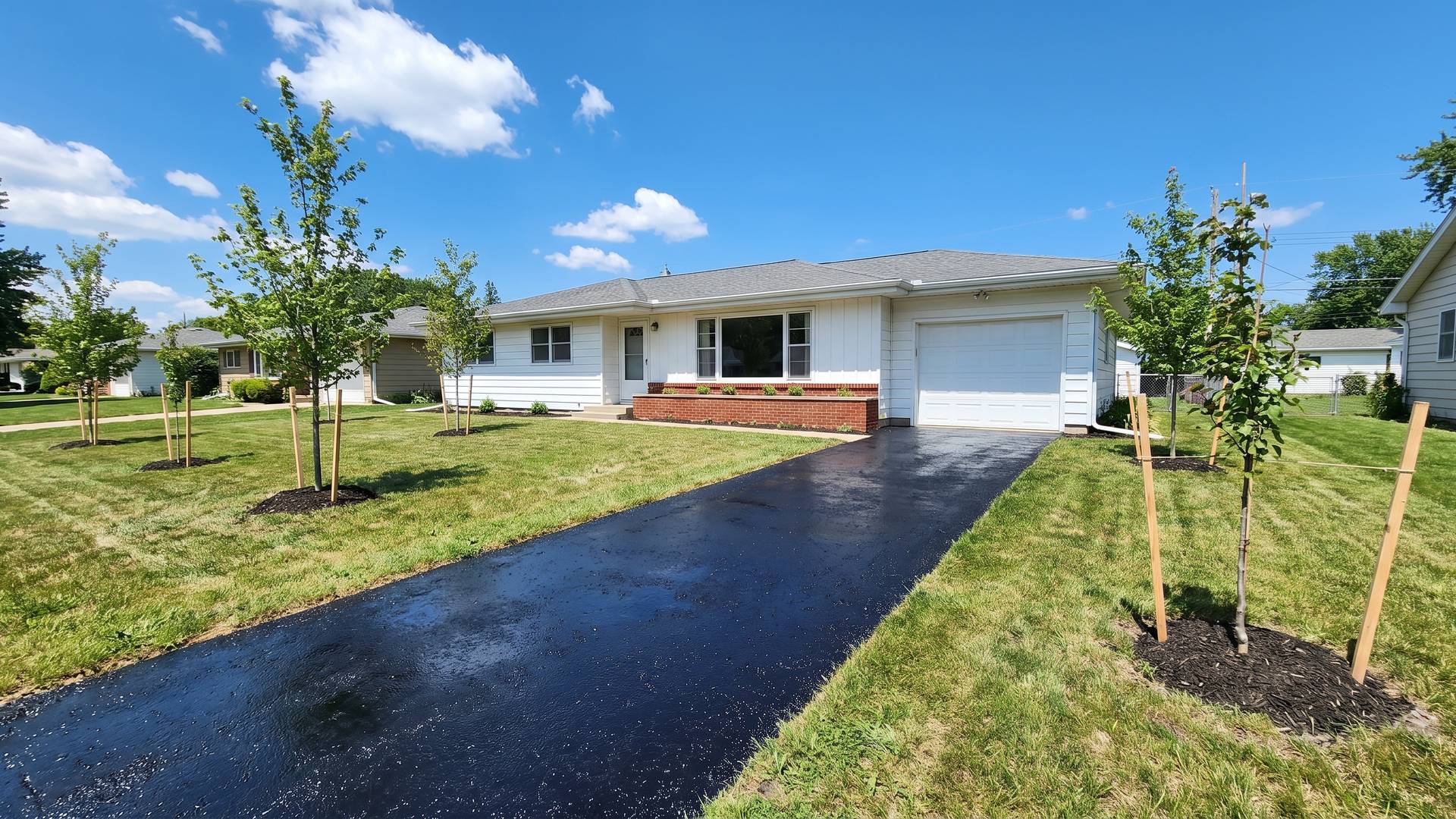
Wet new sealcoat glistens on a narrow driveway past staked young trees to a white ranch with a red brick planter

Sealcoating Cedar Rapids

(319) 387-0113

Free Cedar Rapids quotes for driveways and lots.

Asphalt Sealcoating for Cedar Rapids Driveways and Lots

NOAA's station at the Eastern Iowa Airport averages about 90 days a year that start below freezing and end above it, and the 2020 derecho took more than 65 percent of the city's tree canopy. Here is what both do to asphalt, and what the work costs.

  • About 90 freeze-thaw days a year at the Eastern Iowa Airport, NOAA 1991-2020 normals
  • More than 65% of the city's tree canopy lost in the August 10, 2020 derecho
  • Median Cedar Rapids home built in 1974; 59% of housing units predate 1980
Flood, Wind, Frost

What 2008, 2020 and 90 freeze-thaw days mean for a driveway

Two dates explain a lot about the asphalt in this city. On June 13, 2008 the Cedar River crested at 31.12 feet, more than eleven feet above the previous record, and floodwater reached 7,198 parcels, 5,390 of them houses. On August 10, 2020 a derecho crossed Linn County, and the National Weather Service matched damage in parts of town to winds of 130 to 140 mph. Up to 100,000 trees were damaged or destroyed, more than 65 percent of the canopy, and crews later hauled 4,249,900 cubic yards of tree debris off the streets. One event soaked the ground under driveways; the other took away their shade.

Underneath those two events is the ordinary weather that works on pavement every year. NOAA's 1991-2020 normals for the airport station, USW00014990, count 143 nights a year at or below 32 degrees and 53 days when the high never climbs past freezing. The gap, about 90 days, is how often water sitting in a crack can freeze and thaw within a single day. March alone averages close to 19 of them, which is why potholes open in spring. Seal coating protects the top of the pavement from sun and water; filling cracks keeps water out of the stone base underneath.

Most of the pavement here went down while the city was growing fast. Cedar Rapids had 72,296 residents in 1950 and 110,642 by 1970, and the Census Bureau's 2020-2024 American Community Survey puts the median home at 1974, with about 59 percent of 64,423 housing units built before 1980. Cost guides put an asphalt driveway's life at roughly 15 to 30 years, so a drive from that boom has been replaced or resurfaced at least once, or is overdue. Newer ground sits north and east: the median home in Marion dates to 1994 and in Robins to 2003, where the usual question is the first seal, not the fifth.

This site is written for people who want to understand their pavement before paying for work on it. It explains each job in plain terms, publishes observed price ranges from national cost guides on the price page, and sends quote requests to independent contractors who work in Linn County. It does not pave or seal anything itself. Driveway sealing, crack filling, patching, lot striping and new asphalt each have a page, and a separate guide to the post-derecho sun covers what losing the canopy changed for driveways.

Free quote

Fields marked * are required.

Fast response during business hours. No obligation.

The Work

Sealing, crack work, patching and paving for Linn County asphalt

Along a white ranch with dark shutters, the lane by the house is fresh black sealcoat and the outer lane still worn gray

Driveway Sealcoating

Cleaning, crack filling and two coats of sealer on home asphalt, scheduled for the June to August stretch when Cedar Rapids nights stay above 50 degrees.

Typical: $355 - $800 for a 400 sq ft two-car drive; about $0.88 - $2.10 per sq ft

Under a blue sky, black filler follows a long branching crack down a faded driveway toward the street and a white ranch beyond

Crack Filling and Sealing

Cleaning, routing and filling cracks with hot-pour rubberized sealant or cold-pour emulsion so meltwater stays out of the stone base before March's run of freeze-thaw days.

Typical: $0.50 - $3.00 per linear ft; most driveways $100 - $400

Fresh asphalt patches the curb end of a cracked, faded driveway at a white ranch, a young staked tree mulched on the lawn

Asphalt Patching and Potholes

Cold patch for winter emergencies and saw-cut, full-depth hot-mix patches for potholes, soft spots and stump holes, rebuilt to firm base before any sealer goes on.

Typical: $100 - $500 per pothole or small patch; $2 - $12 per sq ft for larger areas

Tan brick apartments overlook new black sealcoat and crisp lines along the building, the front half of the lot still faded gray

Parking Lot Sealcoating

Cleaning, crack sealing and two or three coats on commercial, church and apartment lots, scheduled around business hours and the short June to August sealing window.

Typical: $0.20 - $0.50 per sq ft; $0.60 - $0.80 per sq ft with crack sealing

Mulch, shrubs and staked young trees fill a new curbed island alongside a long row of freshly painted stalls on dark, even sealcoat

Line Striping and Stall Layout

Restriping stalls, arrows, crosswalks and accessible spaces after sealcoating or on a worn lot, laid out to the ADA stall counts and repainted as winter wears them down.

Typical: $4 - $5 per standard stall; $25 - $40 per accessible stall

Young trees blaze red and orange in the curbed islands of a freshly sealed office lot, a low brick building behind

Asphalt Maintenance Plans

A yearly schedule for driveways and lots built on the airport station's months: spring inspection, crack sealing, summer sealcoat, fall checks and winter plow-damage notes.

Typical: Per visit: sealing $0.20 - $0.50 per sq ft; crack sealing $1 - $2 per linear ft

Puffy clouds drift over a white ranch as a yellow roller waits by its garage door, the driveway below freshly paved

Asphalt Paving and New Drives

New and replacement asphalt driveways built on a stone base sized for local soils and frost, with right-of-way permits, the hot-mix season and curing time planned in.

Typical: $5 - $15 per sq ft installed; tear-out about $1 - $2 per sq ft

Why this site starts with the weather station and the city code

Built on the airport station's own counts

Every freeze, snow and rain figure here comes from NOAA's 1991-2020 normals for the station at the Eastern Iowa Airport, read month by month rather than borrowed from a regional average. That is how the site can say March brings close to 19 freeze-thaw days while July brings none, and why it points owners at June through August for sealing instead of a vague summer.

Price ranges published before any call

The cost page lists observed ranges from HomeGuide, Angi, Fixr and a commercial contractor's published lot prices, with the driveway size behind each figure. A reader can hold an estimate for a two-car drive, a pothole or a restripe against those bands before agreeing to anything, and can see which numbers are national rather than local.

Independent contractors, one request

The quote form sends a request to independent contractors who work in Cedar Rapids and nearby Linn County towns. This site does not employ crews or sell sealer, so its pages lay out the options instead of steering toward one product. What a contractor finds on site, and what the job costs, is settled between the owner and that contractor.

City rules gathered in one place

Right-of-way permits at the curb, odd-even parking during snow emergencies, the request to keep driveway snow out of the street, the stormwater charge on hard surface and the absence of any coal-tar ban in Iowa all come from official or national lists. This site puts them next to the pavement advice so a job does not run into a rule halfway through.

Job Order

How a sealing job should run between thaw and first frost

  1. Walk the pavement after the last hard freeze

    April still averages about 8 freeze-thaw days at the airport and May almost none, so late April into May is when winter damage has finished showing itself. A useful walk-through marks every open crack, every spot that flexes under a tire, every stump hole or root bump left from 2020, and any low place that held water after the last rain.

  2. Repair the base before touching the surface

    Soft spots and areas of interlocking cracks are base failures, and sealer will not bridge them. They get cut out, rebuilt with compacted stone and hot mix, and left to cure. Cracks are cleaned, routed where needed and filled with hot-pour rubberized sealant or a cold-pour emulsion product. On a drive cut into a paha slope, it pays to find where seep water comes from before patching the spot it softens.

  3. Clean, treat oil spots and wait for the right day

    The surface is swept, blown and edged back to the pavement line, and oil or transmission-fluid spots get a primer so sealer can bond. Then the forecast decides: SealMaster's guidance is 50 degrees and rising for 24 hours with no rain expected in that time. At the airport station, June through August nights rarely fall to 50, while May and September nights do so roughly half the time.

  4. Apply two coats and keep traffic off

    The standard is two coats, and SealMaster suggests a third on entrances and lanes that take the most turning. Cars stay off for at least 24 hours after the final coat, and HomeGuide puts full drying anywhere from 12 to 72 hours depending on conditions. The drive edges, the concrete apron and the sidewalk crossing are masked or cut in by hand so sealer stays on the asphalt.

On the Ground

Paha soils, snow rules and street programs under Cedar Rapids asphalt

The ground under the city is not one soil. The Iowa Geological Survey places this part of the state on the Iowan Surface, a landscape planed down between about 21,000 and 16,000 years ago by freeze-thaw and slope wash when the region was tundra. Long ridges of wind-blown loess and sand, called paha, stand 30 to 100 feet above it, and the survey names the Kirkwood Community College campus in Cedar Rapids as one of the prominent examples. It also notes that porous loess and sand sitting on clay-rich buried soil and glacial till produce hillside seeps. A driveway cut into the side of a paha can have water arriving from underneath, not just from above.

Loess is wind-blown silt, and NRCS descriptions of loess soils such as the Tama series list silt loam and silty clay loam textures. Pavement references rank silts and clays among the soils that lose the most support in a thaw: ice lenses grow in their fine pores in winter and leave trapped water behind when they melt. The opposite case is also here. The Chelsea series, an excessively drained wind-blown sand, has its official type location about two miles north of Central City in Linn County, and it moves water far faster than silt. That is why a crew should look at what a drive sits on before promising how long it will last.

The sealing season is shorter than the calendar suggests. Sealer manufacturers want 50 degrees and rising for a full day and no rain for 24 hours. At the airport station the low still drops to 50 or below on about 17 nights in an average May and 13 in September, but only about 3 in June, fewer than 1 in July and 2 in August. June is also the wettest month, with 4.92 inches of precipitation. Median dates put the last spring freeze on April 25 and the first fall freeze on October 6, and most of the 26.7 inches of normal snowfall arrives from December through February.

City streets run on their own maintenance cycle. Voters approved a one-percent local option sales tax for street repair in 2013, the Paving for Progress program started on July 1, 2014, and a 2021 vote extended it through June 30, 2034. When the city talks about seal coating a street, it means something different from a driveway coat: Public Works sprays asphalt emulsion at 0.35 gallons per square yard and covers it with 3/8-inch oil-coated limestone chips. Its overlays are a 2- to 3-inch mat across the whole street. Neither reaches past the curb, and neither changes what a private drive needs.

Winter rules reach the end of every driveway. Public Works plows more than 1,400 lane miles with about 100 pieces of equipment and keeps 6,000 tons of snow-fighting material and 10,000 gallons of brine on hand. During a declared snow emergency, cars park on the odd-address side on odd calendar days and the even side on even days, and parking on posted emergency snow routes is banned. The city asks residents not to push or blow driveway snow into the street, and sidewalks must be cleared within 24 hours after a storm ends. The plow windrow across the apron, salt included, is part of every local driveway's winter.

Work at the street edge involves the city. A builder digging in the right-of-way needs an approved Application for Excavations in Public Right-of-Way Permit, and the city's builder handout calls for sidewalks at least 6 inches thick where they cross a driveway, with 1 inch of expansion material at the back of the curb sealed against surface water. Driveways and parking lots also count as hard surface in the city's stormwater utility, which bills by impervious area. On sealer chemistry, no Iowa city, county or state rule appears on Coal Tar Free America's national list of coal-tar sealant bans, so the choice between coal-tar and asphalt-based products is left to the owner.
Price Ranges

What sealing and repair typically run around Cedar Rapids

The ranges below are observed market prices from national cost guides, HomeGuide, Angi and Fixr, plus the published lot prices of one commercial asphalt contractor. They are not quotes. None of these sources publishes a Cedar Rapids-only figure, so read them as bands for judging an estimate rather than as a local price list. Where a guide priced a whole driveway, the size behind the figure is stated, and crack filling, patching and striping are listed on their own lines because the guides price them separately.

Service Typical Cedar Rapids Range
Two-car driveway, about 400 sq ft, cleaned and sealed $355 - $800
Three-car driveway, about 864 sq ft, cleaned and sealed $860 - $1,700
Full-service residential sealing, per square foot $0.88 - $2.10 per sq ft
Crack filling, hot-pour or cold-pour $0.50 - $3.00 per linear ft
Questions

What Cedar Rapids owners ask before sealing

How much does driveway sealing cost in Cedar Rapids?

National cost guides put a 400-square-foot two-car driveway at about $355 to $800 for cleaning and sealing, and a 24-by-24-foot drive at $580 to $1,200. Per square foot, full-service residential sealing runs about $0.88 to $2.10 in Fixr's figures. None of these sources publish Cedar Rapids-only prices, so treat them as bands for checking an estimate. Crack filling and patching are usually priced separately, and the full cost breakdown lists them line by line.

Which months give sealer the weather it needs in Cedar Rapids?

June, July and August are the dependable months. Sealer needs roughly 50 degrees and rising for 24 hours and a dry day to cure, and NOAA's airport normals show lows at or below 50 degrees on only about 3 June nights, fewer than 1 in July and 2 in August. May and September each have a dozen or more such nights, so jobs then depend on the week's forecast. By October the count reaches about 27 nights, which effectively closes the season.

Is coal-tar sealer legal in Cedar Rapids and Linn County?

Yes. No Iowa city or county, and not the state, appears on Coal Tar Free America's national list of coal-tar sealant bans, while Minnesota has banned it statewide. The U.S. Geological Survey puts the polycyclic aromatic hydrocarbon (PAH) content of coal-tar sealcoat at roughly 1,000 times that of asphalt-based sealcoat, and its researchers traced worn flakes onto tires and shoes and into runoff. An owner who wants an asphalt-emulsion or acrylic product can ask for it by name in the quote request.

Did losing the trees in 2020 change how often a drive needs sealing?

For many drives, yes. Shade keeps pavement cooler and out of direct sunlight, and an EPA heat-island compendium cites a field study in which tree shade cut slurry resurfacing costs on a residential street by roughly 15 to 60 percent, depending on the trees. A drive that sat under a maple until 2020 now takes full sun, so its binder oxidizes and grays sooner. Checking color and texture each spring, rather than going by a fixed calendar, is the safer approach.

The city seal coated my street. Does that cover my driveway?

No. City seal coating on streets is a chip seal: an asphalt emulsion sprayed at 0.35 gallons per square yard and covered with 3/8-inch oil-coated limestone chips. It is a street treatment, part of how Public Works maintains pavement alongside crack sealing, milling and overlays, and it stops at the curb. A private driveway gets a smooth, squeegee- or spray-applied sealcoat instead, arranged and paid for by the owner.

What rules apply where a driveway meets the sidewalk and curb?

That strip is public right-of-way. The City of Cedar Rapids requires an approved Application for Excavations in Public Right-of-Way Permit before a builder digs there, and its builder handout sets sidewalks at a minimum of 6 inches thick where they pass through a driveway, with 1 inch of sealed expansion material at the back of the curb. Asphalt sealing stops at that concrete. A contractor who proposes to cut or replace the apron should be the one pulling the permit.

Can snow from my driveway go into the street?

The city asks residents not to push or blow snow from driveways or parking lots into public streets, and in neighboring Robins the city code makes it unlawful. Plows will still leave a windrow across the apron, because avoiding it would add significant time to every route. Piling snow on the lawn side of the drive, rather than along the asphalt edge, keeps meltwater from soaking into the edge of the pavement all winter.

Will paving or sealing change my stormwater charge?

Sealing will not, because it adds no hard surface. Cedar Rapids bills its stormwater utility by impervious area, counting rooftops, driveways and parking lots, with one billing unit equal to a tenth of an acre of hard surface. Paving a gravel pad, widening a drive or adding a parking area adds to that area. The city also runs a cost-share program for stormwater practices and takes reduction requests, both worth asking about before a large paving job.

My block flooded in 2008. Should I worry about the driveway now?

Probably not because of the flood itself, 18 years on. Pavement that lost support when the Cedar River put water over 10 square miles of the city would have shown it as sinking or cracking long ago. What still matters is drainage: low spots that hold water after a rain, and depressions that pavement references tie to subgrade settlement or frost heave. Those are questions for a patch or a rebuild, not for sealer.

How many years can a sealed driveway go between coats here?

The guides disagree: SealMaster says every two to three years, Angi three to five, and HomeGuide anywhere from two to ten. Locally the deciding factors are sun and traffic. A drive that lost its shade in 2020, faces south or west, or carries a work truck will gray sooner. A shaded, lightly used drive can go longer. Resealing when the black has faded to gray, not on a fixed date, keeps the schedule matched to the pavement.

Coverage

Neighborhoods and Linn County towns in reach

Marion Hiawatha Robins Mount Vernon Czech Village NewBo Kenwood Park Wellington Heights Noelridge Park Bowman Woods Wilderness Estates Kingston Village Oakhill Jackson Moundview Fairfax Palo Ely Lisbon

Ask for a quote before the June to August window fills

Describe the drive or lot and what you see on it. The request goes to independent contractors who work in Cedar Rapids and nearby Linn County towns.

Free quote

Fields marked * are required.

Fast response during business hours. No obligation.